How Does a Body Worn Camera 4G/5G Antenna Ensure Reliable Wireless Connectivity in Critical Field Operations
Reliable wireless communication is essential for modern law enforcement, public safety, and industrial monitoring equipment. As wearable recording devices become increasingly sophisticated, choosing the right Body Worn Camera 4G/5G Antenna is critical to maintaining stable video transmission, real-time data communication, and dependable connectivity. Qianmu, a professional RF antenna manufacturer, develops customized wideband FPC antennas designed to support mainstream 4G LTE and 5G Sub-6GHz applications while addressing the unique challenges of compact body-worn devices.
Article Summary: This article explores how 4G/5G antennas improve body camera connectivity, explains FPC antenna technology, examines essential RF specifications, and discusses practical antenna selection considerations. It also introduces Qianmu's customized antenna solutions for law enforcement cameras, industrial wearable terminals, and other professional communication devices.
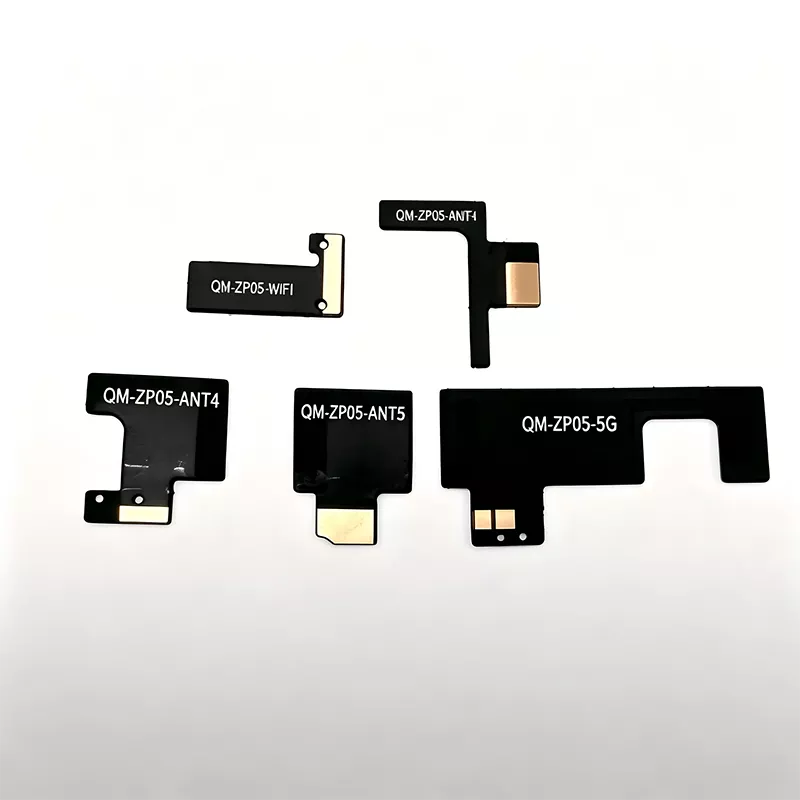
Table of Contents
- Why Is Antenna Performance Important for Body Worn Cameras?
- What Technology Makes a 4G/5G Body Camera Antenna Effective?
- How Does the Antenna Work in a Wearable Camera?
- What Are the Key Technical Specifications?
- Which Devices and Applications Can Use These Antennas?
- How Should Manufacturers Select the Right Antenna?
- Why Are Testing and Reliability Important?
- Why Choose Qianmu for Customized Antenna Solutions?
- Frequently Asked Questions
- Conclusion
Why Is Antenna Performance Important for Body Worn Cameras?
Body-worn cameras are widely used by police officers, traffic enforcement personnel, security teams, and industrial workers. Unlike conventional wireless terminals, these devices operate in close contact with the human body and are frequently exposed to movement, changing environments, and physical interference.
A reliable cellular antenna directly influences the ability of a camera to transmit high-definition video, upload recorded evidence, send emergency alerts, and communicate with remote management platforms.
Several factors make antenna design particularly challenging for wearable cameras:
- Limited installation space: Compact camera housings leave little room for traditional antenna structures.
- Metal shielding interference: Metal enclosures, brackets, and motherboard shields can affect RF radiation performance.
- Battery interference: Lithium batteries and internal electronic components may influence antenna impedance and efficiency.
- Human body absorption: When a camera is attached to a uniform or worn on the chest, the human body can absorb or detune electromagnetic signals.
- Harsh operating conditions: Daily field operations expose devices to vibration, temperature changes, humidity, and physical impact.
Therefore, selecting a professional Body Worn Camera 4G/5G Antenna requires more than checking frequency compatibility. Engineers must evaluate the antenna as part of the complete wearable device system.
What Technology Makes a 4G/5G Body Camera Antenna Effective?
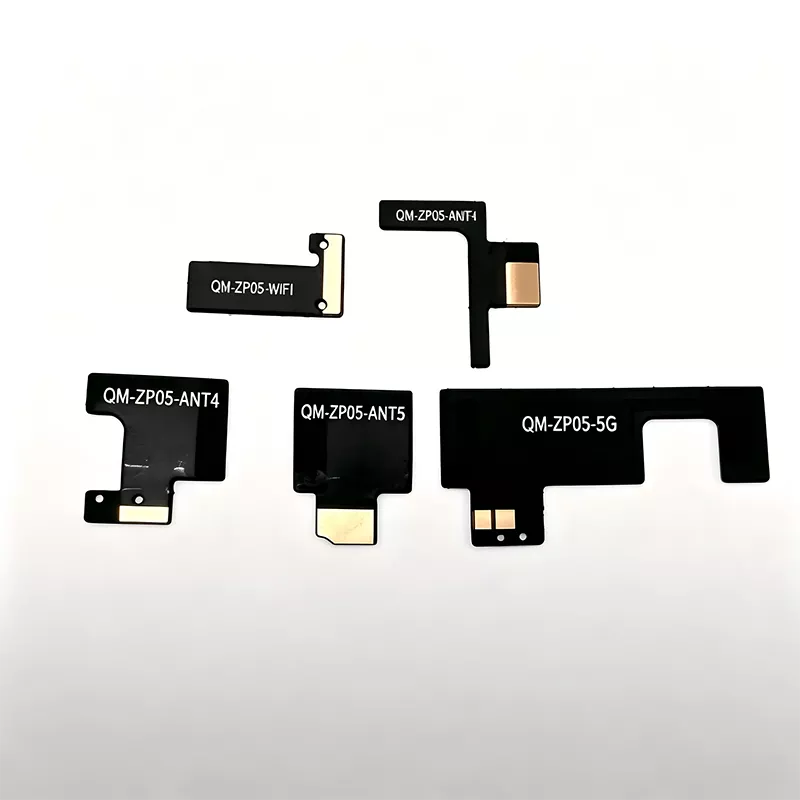
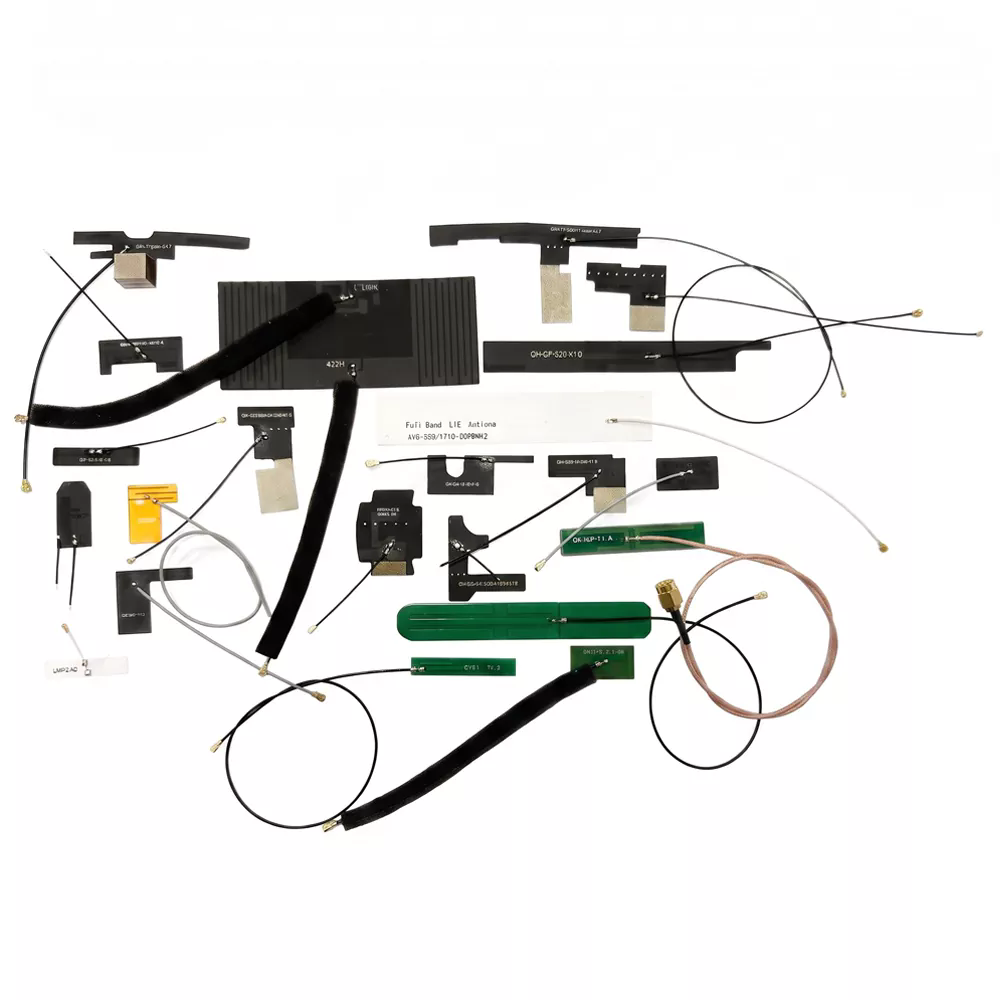
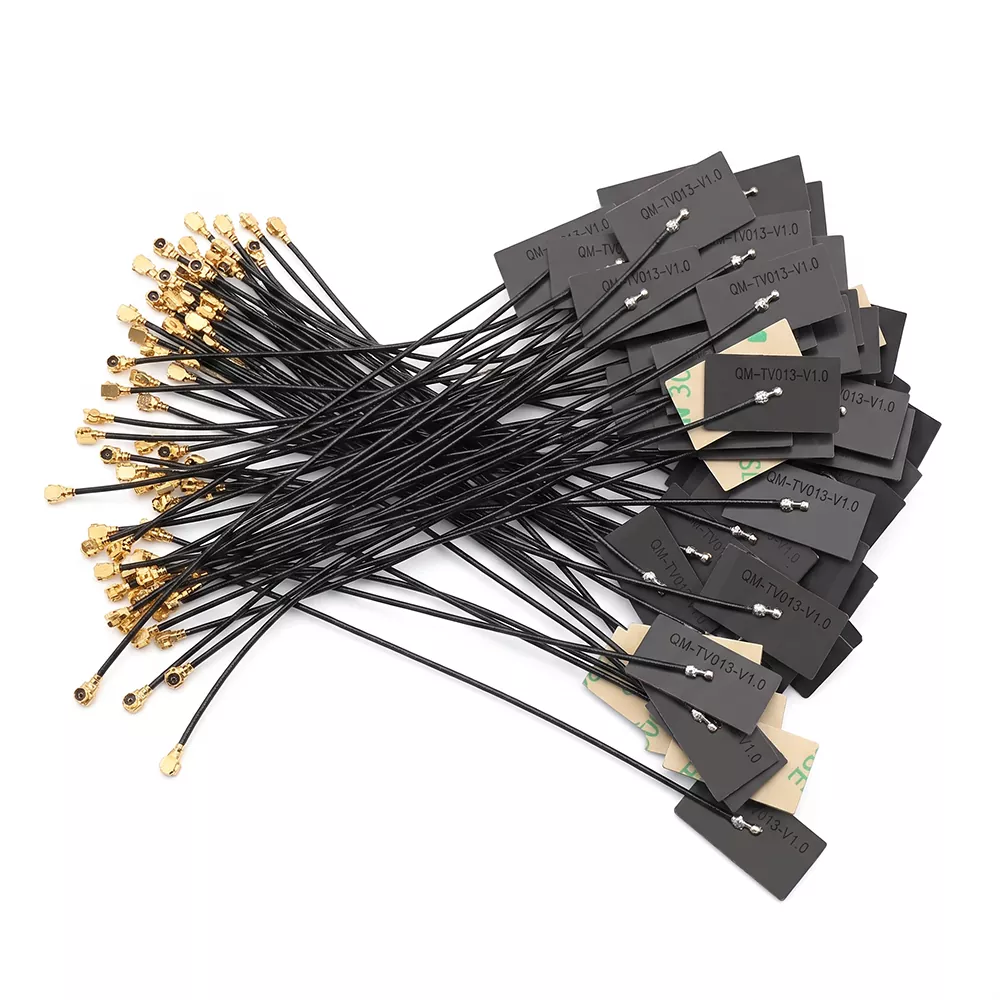
Flexible Printed Circuit (FPC) antenna technology is particularly suitable for compact wearable electronics. It allows manufacturers to integrate RF radiation elements into irregular internal spaces without requiring bulky external antenna structures.
Qianmu's solution uses a wideband Planar Inverted-F Antenna (PIFA) structure on a flexible Polyimide (PI) substrate. This built-in antenna is designed for mainstream 4G LTE and 5G Sub-6GHz frequency bands.
1. Flexible PI Substrate
Polyimide provides a lightweight and bendable foundation for antenna manufacturing. Its flexibility makes it suitable for customized internal layouts, especially when the available installation area is limited or irregularly shaped.
2. Wideband PIFA Structure
The PIFA design supports multiple cellular frequency bands within a compact structure. It helps manufacturers integrate cellular connectivity without relying on several separate antennas for different LTE and 5G bands.
3. Industrial Adhesive Mounting
Industrial-grade high-temperature double-sided adhesive helps secure the antenna inside the camera housing. Proper positioning and attachment are important for maintaining consistent RF performance during movement and long-term operation.
4. Customized RF Feedline
The antenna can use U.FL/IPEX coaxial connections, with cable lengths and connector configurations customized according to motherboard requirements. This flexibility simplifies integration and reduces additional assembly work.
How Does the Antenna Work in a Wearable Camera?
A Body Worn Camera 4G/5G Antenna performs bidirectional electromagnetic conversion, enabling the communication module to exchange wireless information with cellular base stations.
The complete antenna system generally consists of four major components:
- FPC radiating conductor for electromagnetic signal transmission and reception.
- Industrial adhesive backing for internal mechanical installation.
- U.FL/IPEX coaxial feeder for connecting the antenna to the RF interface.
- Mainboard RF matching network for maintaining suitable impedance characteristics.
During signal transmission: The communication module converts digital information, including video streams, location information, and emergency notifications, into RF signals. These signals travel through the coaxial feeder to the antenna's radiating element, which converts them into electromagnetic waves for wireless transmission.
During signal reception: The antenna captures electromagnetic waves transmitted by cellular base stations and converts them into electrical signals. The communication module processes these signals to support remote commands, network communication, and data reception.
Because wearable cameras operate close to the human body, antenna simulation should account for realistic wearing conditions. Qianmu incorporates human-body phantom models and complete device structures into its antenna evaluation process to help optimize system-level performance.
What Are the Key Technical Specifications?
Technical specifications provide an essential reference when evaluating an antenna for a professional body camera project. However, engineers should distinguish between nominal design requirements and measured results under simulated installation conditions.
The following table summarizes the main specifications of Qianmu's Body Worn Camera 4G/5G Antenna.
| Parameter | Specification | Typical Measured Performance |
|---|---|---|
| Product Type | Built-in FPC Broadband Sub-6G Antenna | Customized industrial antenna |
| LTE Frequency Bands | B1 / B3 / B5 / B8 / B20 / B38 / B40 | Multiband resonance |
| 5G Frequency Bands | N41 / N78 / N79 | Sub-6GHz compatibility |
| Standard Impedance | 50Ω | Factory pre-matched |
| VSWR | ≤1.8 | Typically ≤1.5 |
| LTE Low-Frequency Whole-System Radiation Efficiency | ≥50% | ≥52% |
| 5G N78 Whole-System Radiation Efficiency | ≥45% | ≥47% |
| RF Connector | U.FL / IPEX | Customized cable length |
| Substrate | Flexible PI Film | Compact internal installation |
These parameters help equipment developers evaluate compatibility with cellular communication modules and internal device structures. Actual performance may vary depending on enclosure materials, antenna clearance, installation position, motherboard design, and the surrounding electromagnetic environment.
For additional product information, visit the Qianmu Body Worn Camera 4G/5G Antenna product page.
Which Devices and Applications Can Use These Antennas?
Wideband wearable camera antennas support various professional communication devices that require compact construction and reliable cellular connectivity.
Public Security and Law Enforcement Cameras
Police and traffic enforcement cameras require stable cellular communication for remote video transmission, evidence collection, and emergency reporting. Integrated LTE and 5G antennas help maintain connectivity without increasing the external dimensions of the device.
Firefighting and Emergency Response Equipment
Fire departments and emergency response teams use wearable recording devices to document field activities and share operational information. Compact antennas with appropriate environmental reliability testing help support these applications.
Explosion-Proof Industrial Recording Devices
Chemical plants, mining facilities, and other industrial environments may require specialized intrinsically safe recording equipment. Antenna integration must be evaluated alongside the device's applicable safety certification and enclosure requirements.
Power Inspection and Single-Soldier Terminals
Wearable communication terminals used for power inspections and individual field operations benefit from lightweight FPC antennas that fit compact internal structures while supporting cellular data transmission.
Typical compatible communication modules include:
- 4G LTE Cat.1 communication modules.
- 4G LTE Cat.4 communication modules.
- 5G Sub-6GHz communication modules.
- Integrated 4G, 5G, and Wi-Fi communication platforms, with separate antennas configured where required.
How Should Manufacturers Select the Right Antenna?
Choosing an antenna for a body camera project requires coordination between RF engineering, mechanical design, and production teams. A suitable selection process can reduce development risks and avoid expensive structural modifications.
1. Confirm Frequency Band Requirements
Different countries and cellular operators use different frequency allocations. Manufacturers should identify the target markets before selecting an antenna.
For example, the required LTE bands may include B1, B3, B5, B8, B20, B38, and B40, while 5G Sub-6GHz projects may require N41, N78, and N79. Export projects should confirm local operator compatibility rather than assuming that one frequency configuration works worldwide.
2. Evaluate the Complete Device Structure
Do not evaluate antenna performance only in free space. The actual camera enclosure, battery, motherboard, metal brackets, and mounting position can significantly influence RF characteristics.
3. Check Installation Space and Clearance
Provide the antenna supplier with 3D housing drawings whenever possible. This allows engineers to evaluate the available installation area, cable routing, antenna orientation, and distance from potential interference sources.
4. Request Real-World RF Test Reports
VNA and OTA measurements provide important information about impedance matching, radiation efficiency, and overall device performance. Human-body simulation is particularly valuable for wearable applications.
5. Consider Customization and Technical Support
Professional manufacturers should be able to support custom FPC shapes, cable lengths, connector configurations, and frequency-band optimization. Early engineering involvement can reduce repeated sampling and unnecessary mold modifications.
Why Are Testing and Reliability Important?
Body-worn cameras are designed for repeated use in demanding environments. Their antenna systems must maintain suitable electrical and mechanical characteristics throughout the expected operating conditions.
Important evaluation procedures include:
- VNA testing: Evaluates antenna impedance and VSWR characteristics.
- OTA testing: Measures radiation performance under realistic device configurations.
- Anechoic chamber simulation: Helps evaluate antenna performance while accounting for the camera housing and human-body effects.
- Drop testing: Assesses mechanical reliability under impact conditions.
- Temperature cycling: Evaluates performance under changing temperature conditions.
- Salt spray testing: Helps assess material resistance in corrosive environments.
- Humidity testing: Evaluates reliability under moisture exposure.
Qianmu performs full-device OTA simulation and maintains VNA and OTA test records by production batch. Relevant inspection reports can be provided upon request, helping customers establish traceability during sample evaluation and mass production.
Why Choose Qianmu for Customized Antenna Solutions?
Shenzhen Qianmu Communication Technology Co., Ltd. specializes in the research, development, and manufacturing of built-in RF antennas for wearable devices, body-worn cameras, and industrial IoT applications.
By integrating product development, manufacturing, and international trade services, Qianmu provides antenna solutions for security equipment integrators, law enforcement device brands, and OEM/ODM customers.
Key advantages include:
- Direct manufacturing capability: In-house production covers FPC cutting, reinforcement, adhesive backing, and electrical inspection.
- Professional RF engineering: Support for 3D structural evaluation, antenna positioning recommendations, and system-level interference troubleshooting.
- Flexible OEM/ODM customization: Customized antenna shapes, cable lengths, connector specifications, and frequency configurations.
- Quality inspection and traceability: Batch-based VNA and OTA records, together with relevant reliability testing and inspection documentation.
- International project support: English technical specifications, export documentation, and FOB Shenzhen trade support.
- Technical after-sales assistance: Engineering support throughout sampling, pilot production, and mass production.
For new projects, customers can provide 3D housing drawings and communication module information for an initial antenna structure assessment. Qianmu also supports customized sampling, with standard sample delivery targeted within 35 working days, subject to project requirements.
Explore more solutions through Qianmu's professional RF antenna manufacturing website or browse its body-worn camera antenna product category.
Frequently Asked Questions
Q1: Can a Body Worn Camera 4G/5G Antenna support both LTE and 5G networks?
Yes. A properly designed wideband antenna can support multiple LTE bands and mainstream 5G Sub-6GHz bands. Qianmu's antenna supports LTE B1/B3/B5/B8/B20/B38/B40 and 5G N41/N78/N79. Final compatibility should be confirmed against the communication module and target network requirements.
Q2: Can the FPC antenna be customized for an irregular camera housing?
Yes. Customized FPC cutting and antenna dimensions are available. Customers can provide 3D housing drawings so engineers can evaluate the installation space and develop an appropriate antenna shape for prototype testing.
Q3: Can the same antenna be used for cellular and Wi-Fi communication?
The antenna described here is designed for 4G LTE and 5G Sub-6GHz cellular communication. For reliable Wi-Fi operation, a separate Wi-Fi antenna is generally recommended to reduce potential interference and maintain suitable performance.
Q4: Why does a body camera experience weaker signals after installation?
Possible causes include insufficient antenna clearance, nearby metal components, battery interference, incorrect installation orientation, loose RF connectors, and human-body signal absorption. Complete-device OTA testing can help identify the actual source of performance degradation.
Q5: What connector does this body camera antenna use?
The standard connection is U.FL/IPEX. Cable lengths and connector configurations can be customized according to the customer's motherboard layout and mechanical requirements.
Q6: How can buyers verify antenna quality before mass production?
Buyers should request relevant VNA and OTA test records, evaluate antenna performance in the complete device, and review applicable reliability test results. Sample testing under realistic wearing conditions is especially important for law enforcement and industrial equipment.
Q7: Does Qianmu provide OEM and ODM antenna manufacturing services?
Yes. Qianmu supports customized FPC dimensions, irregular cutting shapes, RF cable lengths, connector configurations, and frequency-band adjustments. Technical assistance is available during product development, sampling, and mass production.
Conclusion
A reliable Body Worn Camera 4G/5G Antenna is an essential component of modern wearable communication equipment. Its performance depends not only on frequency coverage but also on antenna structure, installation clearance, material selection, human-body effects, and complete-device RF testing. With wideband PIFA FPC technology, flexible customization, and professional RF engineering support, Qianmu provides practical antenna solutions for law enforcement cameras, industrial wearable terminals, and other demanding wireless applications. Whether you are developing a new body camera or upgrading an existing product, choosing an experienced antenna manufacturing partner can help improve integration efficiency and product reliability. If you are looking for a customized 4G/5G antenna solution, need technical assistance, or want to discuss your next OEM/ODM project, contact us at Qianmu to explore suitable designs, request sample testing, and receive professional RF engineering support.
Next :
-
Related News
- Why Precise 13.56MHz Matching Matters For Stable NFC Performance
- How Can a Smart Water Meter Antenna Improve Wireless Meter Reading Reliability
- Qianmu Launches Custom LDS 3D Antenna Solutions for Wearable, Automotive & Compact IoT Devices
- How Can the Right NB-IoT Antenna Improve Connectivity and Reliability for Industrial IoT Devices
- How Can the Right DAB Antenna Improve Digital Radio Reception in Modern Vehicles
- FPC vs. PCB Antennas: Key Differences for Compact Electronic Devices
Leave me a message
News Recommendations