How Can a Smart Water Meter Antenna Improve Wireless Meter Reading Reliability
Article Summary: Reliable wireless communication is essential for modern water management systems. A high-performance Smart Water Meter Antenna helps improve signal transmission, overcome metal shielding, and maintain stable data communication in underground and outdoor environments. Shenzhen Qianmu Communication Technology Co., Ltd. specializes in customized antenna solutions for NB-IoT, LoRa, and WM-Bus smart water meters. This article explores how these antennas work, their technical advantages, key specifications, installation considerations, and how to select the right solution for different smart metering projects.
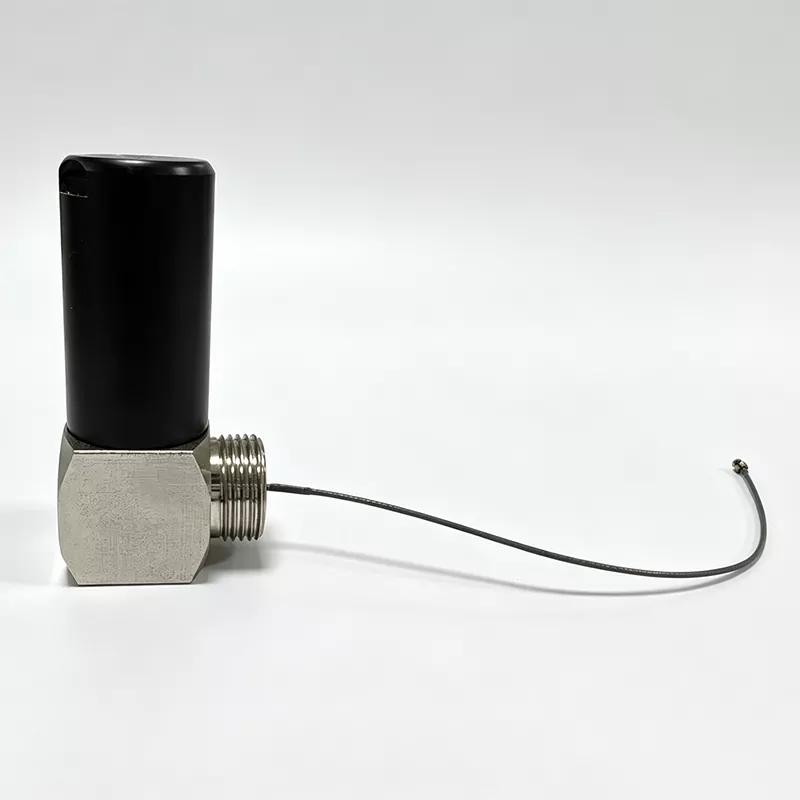
Table of Contents
- What Is a Smart Water Meter Antenna?
- How Does a Smart Water Meter Antenna Work?
- What Features Make a High-Quality Antenna Reliable?
- Technical Specifications and Performance Parameters
- Where Are Smart Water Meter Antennas Used?
- How to Choose the Right Smart Water Meter Antenna
- Installation and Performance Optimization
- Why Choose Qianmu as Your Antenna Manufacturer?
- Frequently Asked Questions
- Conclusion
What Is a Smart Water Meter Antenna?
A Smart Water Meter Antenna is a specialized radio frequency (RF) component designed to enable wireless communication between smart water meters and remote monitoring systems. It transmits and receives electromagnetic signals, allowing water consumption readings, equipment status information, and alarm notifications to be transferred without manual meter inspection.
Unlike conventional mechanical water meters, smart water meters rely on wireless communication technologies such as NB-IoT, LoRa, and WM-Bus to support automated data collection and remote management. The antenna directly influences communication quality, signal coverage, and the reliability of the entire metering system.
External antennas are particularly useful when water meters are installed underground, inside metal enclosures, or in locations with considerable environmental interference. By positioning the radiating element outside the meter housing, they help reduce signal shielding and improve communication performance.
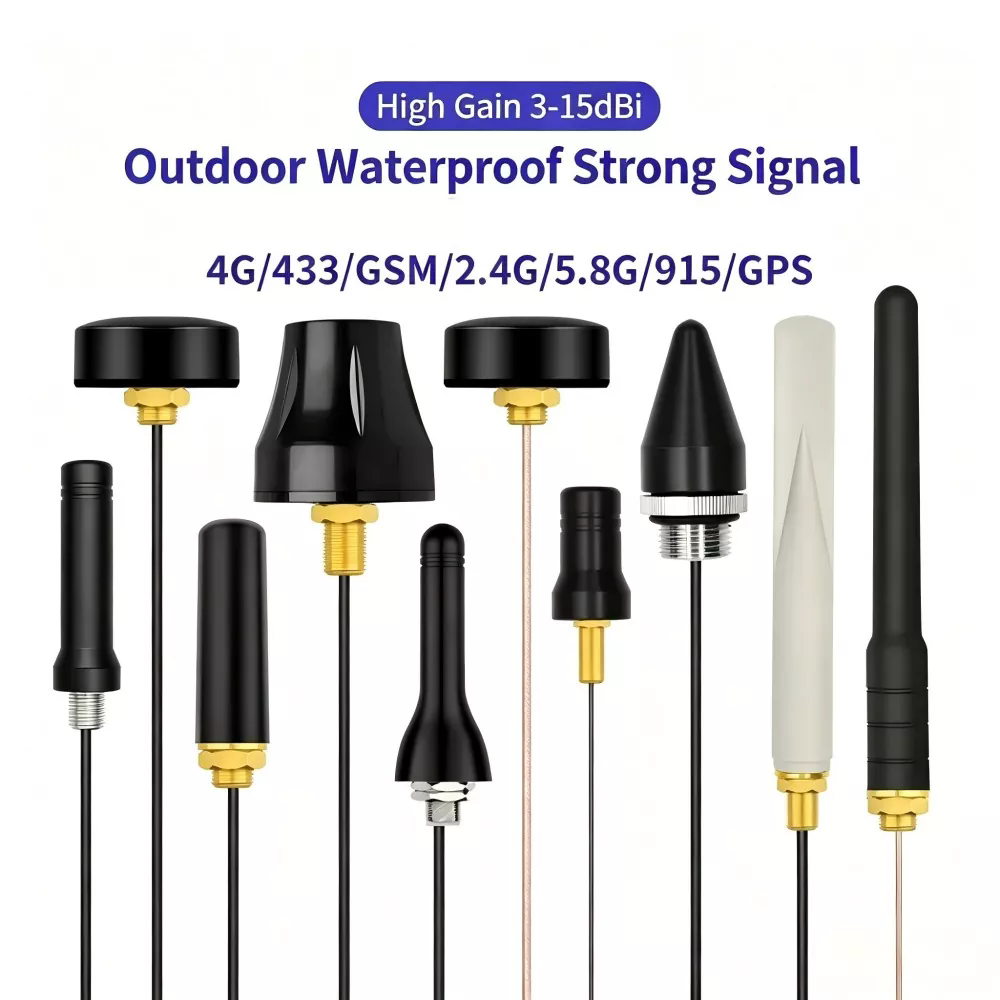
Qianmu develops industrial-grade external antenna solutions featuring waterproof sealing, corrosion-resistant cables, and customizable RF interfaces to meet the requirements of different smart water meter manufacturers and utility projects.
How Does a Smart Water Meter Antenna Work?
The antenna operates as the RF interface between the wireless communication module inside a water meter and the external communication network. Its primary function is to convert electrical RF signals into electromagnetic waves for transmission and convert incoming electromagnetic waves back into electrical signals for reception.
The communication process generally involves three stages:
- Signal transmission: The NB-IoT or LoRa module generates an RF signal and sends it through a coaxial cable to the antenna, which radiates the signal into the surrounding environment.
- Wireless communication: The antenna exchanges signals with nearby network infrastructure or gateways. Its external mounting position helps reduce interference from metal meter housings and internal electronic components.
- Data collection and feedback: Meter readings, equipment status, and abnormal alerts are transmitted to a remote management platform for monitoring, analysis, and operational decision-making.
This communication process supports automated meter reading, remote monitoring, and other smart water management functions. A properly matched antenna can help reduce signal losses and improve communication consistency, especially in challenging installation environments.
What Features Make a High-Quality Antenna Reliable?
Smart water meters often operate in environments where moisture, underground installation, metal obstructions, and temperature fluctuations can affect wireless communication. Therefore, antenna selection should consider both RF performance and long-term environmental durability.
1. External High-Gain Design
External mounting helps reduce the shielding effect of metal meter housings. Combined with an optimized radiation structure, a high-gain antenna can improve signal reception in underground meter pits, concrete enclosures, and densely constructed residential areas.
2. IP67 Waterproof and Corrosion-Resistant Protection
Water meters may be exposed to rainwater, condensation, standing water, and humid underground conditions. An IP67-rated waterproof structure with properly installed sealing gaskets helps protect the antenna against dust and temporary immersion under specified test conditions. Corrosion-resistant cables also support long-term outdoor applications.
3. Wide Operating Temperature Range
Industrial water metering equipment must remain operational across seasonal temperature changes. Qianmu's antenna solution supports an operating temperature range of -40°C to +85°C, making it suitable for demanding outdoor and underground environments.
4. Low-Loss RF Performance
Precise 50Ω impedance matching helps minimize transmission losses between the communication module and antenna. Better RF efficiency can reduce unnecessary retransmission attempts under suitable network conditions, potentially helping lower communication-related energy consumption.
5. Flexible OEM and ODM Customization
Different water meter designs require different mounting structures, cable lengths, connectors, and frequency configurations. Customized antenna solutions help manufacturers integrate wireless communication components into different equipment platforms without unnecessary structural modifications.
Technical Specifications and Performance Parameters
Understanding technical specifications is essential when evaluating a Smart Water Meter Antenna for commercial or industrial applications. The following table summarizes the main parameters of Qianmu's featured NB-IoT and LoRa antenna solution.
| Parameter | Technical Specification |
|---|---|
| Product Name | Smart Water Meter Antenna |
| Antenna Type | Industrial Outdoor Waterproof Gel Stick Antenna |
| Communication Technologies | NB-IoT, LoRa, WM-Bus applications |
| NB-IoT Frequency | 800–960 MHz |
| LoRa Frequency | 470–510 MHz |
| Characteristic Impedance | 50Ω |
| VSWR | ≤1.5 |
| Peak Gain | 2.8–5 dBi |
| Radiation Pattern | 360-degree omnidirectional |
| Polarization | Vertical polarization |
| Protection Rating | IP67 |
| Operating Temperature | -40°C to +85°C |
| Storage Temperature | -45°C to +90°C |
| Optional Connectors | IPEX1, IPEX4, SMA, RP-SMA, soldering end |
| RF Cable | 1.13 RF cable, customizable from 0.5 to 5 meters |
Important purchasing consideration: Frequency compatibility should always be verified against the actual communication module and target network. International NB-IoT and LoRa deployments may use different frequency allocations, so customized frequency configurations may be necessary.
Where Are Smart Water Meter Antennas Used?
Wireless water metering technology is increasingly used in residential, commercial, industrial, and municipal water management. A suitable external antenna helps maintain communication in locations where conventional internal antennas may experience signal attenuation.
- Residential smart water meters: Supports remote household water consumption monitoring and automated meter reading in apartment buildings and residential communities.
- Industrial water metering: Facilitates wireless data communication for large-diameter pipeline meters and industrial water management systems.
- Municipal water networks: Supports remote monitoring of outdoor pipelines, water distribution facilities, and utility infrastructure.
- Underground meter installations: Helps address RF signal obstruction caused by soil, concrete structures, and metal manhole covers.
- LoRaWAN metering networks: Provides antenna connectivity for individual household meters and centralized water supply monitoring systems.
- International smart metering projects: Supports customized frequency and connector requirements for overseas NB-IoT, LoRa, and WM-Bus equipment.
Beyond water meters, similar antenna configurations can also be considered for smart gas meters, heat meters, data acquisition terminals, and other IoT monitoring devices when their RF requirements are compatible.
How to Choose the Right Smart Water Meter Antenna
Selecting an antenna involves more than comparing gain values or purchase prices. Engineers and procurement teams should evaluate the communication system, installation environment, mechanical design, and expected operating lifetime.
1. Confirm the Communication Frequency
First, identify the frequency band supported by the wireless module. NB-IoT, LoRa, and WM-Bus systems may operate on different frequencies depending on the region and network configuration. An antenna must be designed or tuned for the intended operating band.
2. Evaluate the Installation Environment
Determine whether the meter will be installed indoors, outdoors, underground, or inside a metal enclosure. For underground applications or waterlogged meter pits, waterproof protection and external mounting are particularly important.
3. Check RF Performance
Important parameters include antenna gain, VSWR, impedance, radiation pattern, and cable insertion loss. These values should be considered together rather than evaluated independently. Field testing is also necessary because surrounding structures and network coverage influence actual communication performance.
4. Match the Connector and Cable Configuration
Check the available RF interface on the communication module and the mechanical requirements of the meter housing. Connector options such as IPEX, SMA, and RP-SMA should be selected according to the equipment design. Cable length should also be optimized to avoid unnecessary signal loss.
5. Consider Long-Term Supply and Customization
For large-scale smart water projects, supplier capabilities are important. Evaluate sample availability, manufacturing consistency, technical support, quality inspection, and the ability to customize antennas for different production batches.
Installation and Performance Optimization
Correct installation is essential for achieving the expected RF performance and waterproof protection. Even a technically suitable antenna may experience reduced performance if its mounting position or cable connection is incorrect.
The following installation practices are recommended:
- Inspect components: Check the antenna body, RF cable, connector, mounting nut, and waterproof gasket for visible damage before installation.
- Secure the mounting structure: Insert the mounting section into the reserved meter housing hole and tighten the nut evenly to ensure proper gasket contact.
- Connect the RF cable: Align the connector correctly and ensure a secure connection with the wireless communication module.
- Optimize antenna positioning: Keep the radiating section away from unnecessary metal obstructions, dense wiring, and other potential interference sources.
- Protect the cable: Avoid excessive bending, pulling, compression, and sharp cable turns that could damage the internal conductor.
- Perform field testing: Verify signal strength, network registration, meter reading success, and data upload stability before large-scale deployment.
For underground installations, positioning the antenna as high and unobstructed as the enclosure design permits can help improve communication conditions. Actual results should always be verified under the project's operating environment.
Why Choose Qianmu as Your Antenna Manufacturer?
Choosing an experienced antenna manufacturer can simplify product integration and improve supply-chain reliability. Shenzhen Qianmu Communication Technology Co., Ltd. focuses on IoT RF antenna development and manufacturing, providing customized solutions for smart metering and other wireless communication applications.
Key advantages include:
- Application-focused engineering: Solutions designed around the practical requirements of underground meter pits, metal enclosures, outdoor pipelines, and humid operating environments.
- RF testing capabilities: Antenna performance is calibrated in an anechoic chamber, with field testing supporting application verification.
- OEM and ODM services: Customization options include frequency bands, cable lengths, RF connectors, and product configurations.
- Flexible integration: Support for IPEX1, IPEX4, SMA, RP-SMA, and soldering-end interfaces according to project requirements.
- Technical assistance: Support covering antenna selection, sample evaluation, equipment integration, and project commissioning.
- Manufacturing support: Solutions for domestic and international smart water metering projects, including customized requirements for different markets.
For water meter manufacturers, system integrators, and utility equipment suppliers, working directly with an experienced antenna factory can help streamline product development and maintain consistency across production batches.
Learn more about Qianmu Communication and its range of professional wireless antenna products.
Frequently Asked Questions
Q1: What is the main function of a Smart Water Meter Antenna?
Its primary function is to transmit and receive wireless RF signals between a smart water meter and the external communication network. It enables remote meter reading, device status reporting, and alarm data transmission through compatible communication technologies.
Q2: Is an external antenna better than a built-in antenna for underground water meters?
An external antenna can offer advantages in underground installations because its radiating element can be positioned away from the metal meter housing. This helps reduce shielding and may improve signal reception. However, actual performance depends on frequency compatibility, antenna positioning, network coverage, and the surrounding environment.
Q3: Does the Qianmu Smart Water Meter Antenna support both NB-IoT and LoRa?
Yes. Qianmu offers antenna configurations for NB-IoT and LoRa applications, with featured frequency ranges of 800–960 MHz and 470–510 MHz respectively. Frequency customization is available for different regional network requirements. The specific antenna configuration should match the communication module.
Q4: What is the waterproof rating of this antenna?
The product features an IP67 waterproof and dustproof design. Combined with sealing gaskets and corrosion-resistant cabling, it is suitable for demanding environments involving moisture, condensation, and temporary immersion under the conditions defined by the IP67 rating.
Q5: Can the antenna cable length and connector be customized?
Yes. Qianmu supports RF cable customization from 0.5 to 5 meters. Available connector configurations include IPEX1, IPEX4, SMA, RP-SMA, and soldering ends, depending on the equipment integration requirements.
Q6: How much gain does the Smart Water Meter Antenna provide?
The featured product has a peak gain specification of 2.8–5 dBi. The actual communication performance depends on the selected frequency, installation position, cable configuration, and local wireless network conditions.
Q7: Can this antenna operate in extreme temperatures?
Yes. Its specified operating temperature range is -40°C to +85°C, supporting applications in environments exposed to significant seasonal and daily temperature fluctuations.
Q8: How can manufacturers verify antenna performance before mass production?
Manufacturers should evaluate RF parameters, connector compatibility, cable performance, waterproof sealing, and mechanical integration. Field tests should also verify network registration, signal quality, and successful meter data uploads under representative installation conditions.
Conclusion
A reliable wireless connection is fundamental to effective smart water management. Selecting the right Smart Water Meter Antenna can help address metal shielding, underground signal attenuation, moisture exposure, and demanding environmental conditions. By evaluating frequency compatibility, gain, waterproof protection, cable configuration, and installation requirements, water meter manufacturers can develop more dependable wireless metering systems.
With industrial-grade waterproof protection, customized RF configurations, and OEM/ODM manufacturing capabilities, Qianmu provides antenna solutions for NB-IoT, LoRa, and other smart metering applications. Whether you are developing a new water meter, upgrading an existing product, or sourcing antennas for a large-scale utility project, contact us today to discuss your technical requirements, request product samples, and find a suitable antenna solution for your application.
Related News
- Qianmu Launches Custom LDS 3D Antenna Solutions for Wearable, Automotive & Compact IoT Devices
- How Can the Right NB-IoT Antenna Improve Connectivity and Reliability for Industrial IoT Devices
- How Can the Right DAB Antenna Improve Digital Radio Reception in Modern Vehicles
- FPC vs. PCB Antennas: Key Differences for Compact Electronic Devices
- Shenzhen Qianmu Communication Technology Co., Ltd. Launches High-Performance Smart Water Meter Antenna for Global Smart Water Projects
- Why Is a Built-in FM Radio Antenna a Smart Choice for Modern Audio Devices
Leave me a message