What exactly is a rubber ducky antenna?
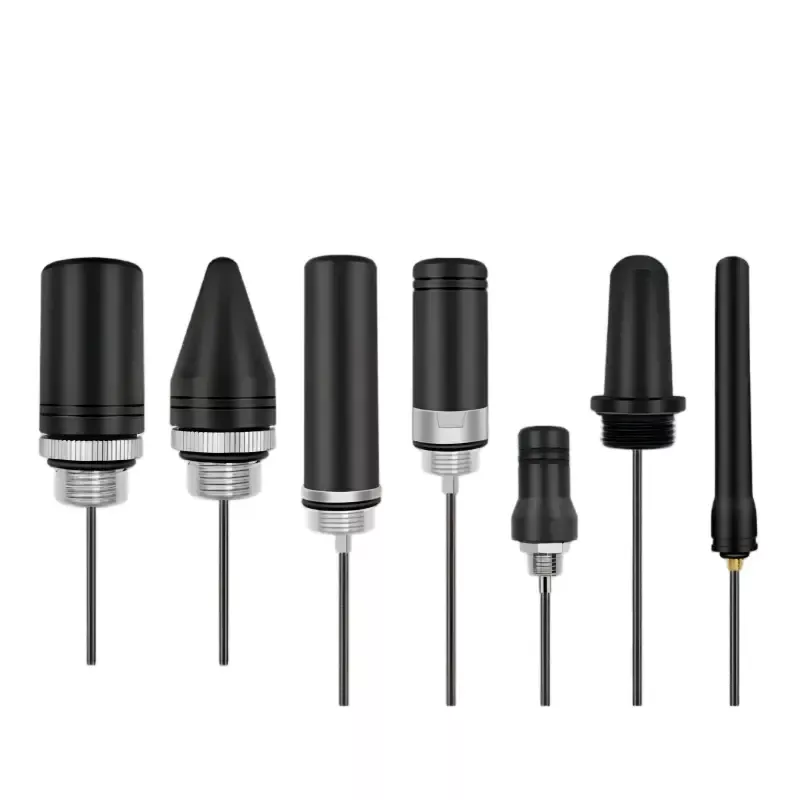
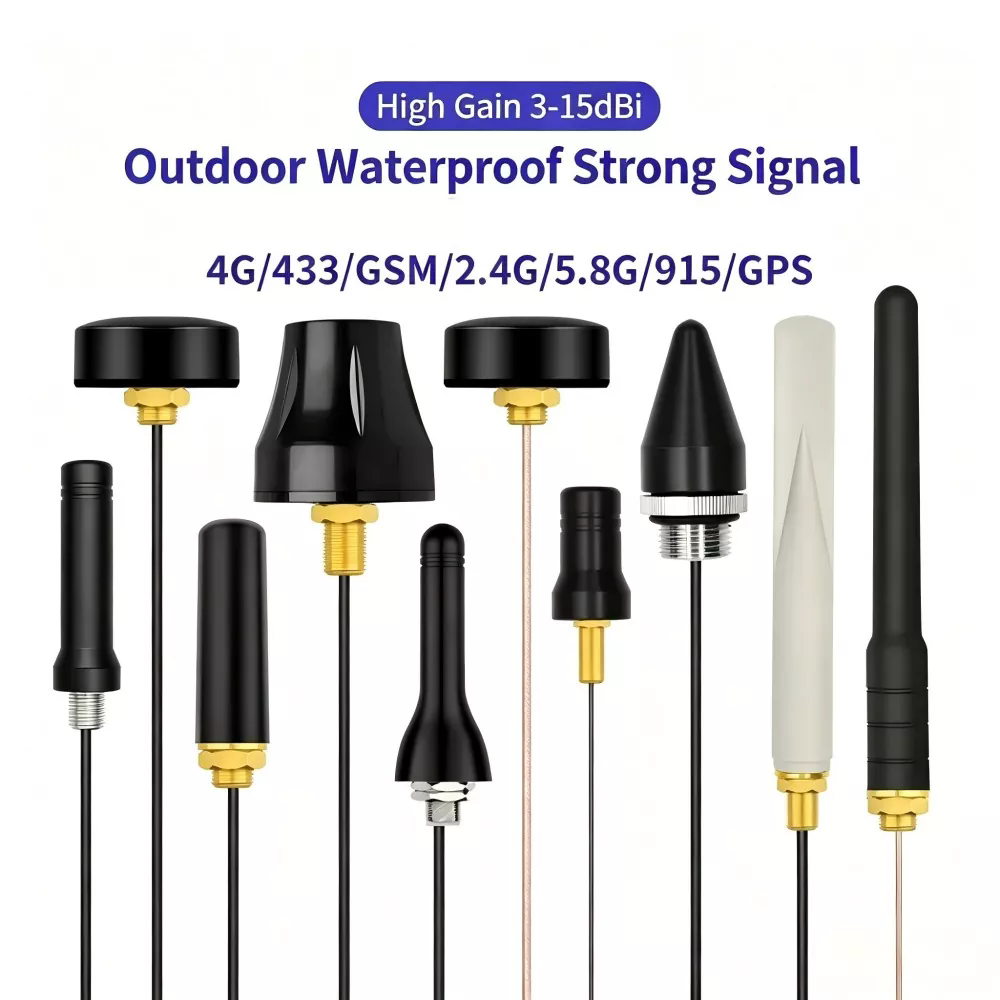
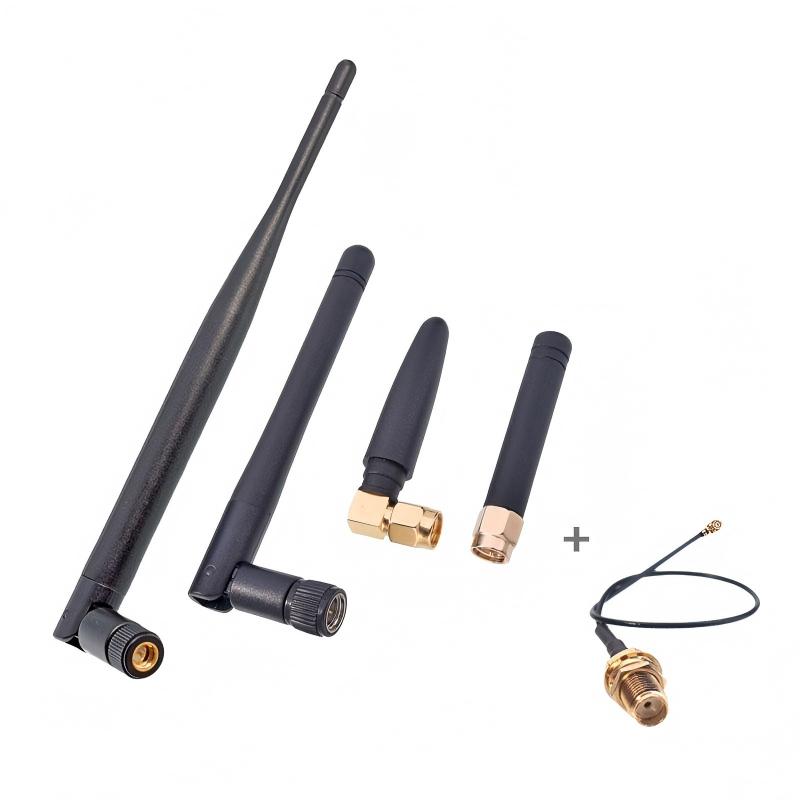
A rubber ducky antenna (commonly known as a rubber antenna or rubber duck antenna) is a common small omni antenna named for its outer protective layer of rubber or plastic. It is widely used in wireless communication devices such as walkie-talkies, wireless routers, car radios, and IoT devices. Qianmu Communications explains its core characteristics and working principles:
1. Structure and Design Features
External materials:
The outer layer is made of flexible rubber/silicone (a few are hard plastic), providing physical protection such as waterproofing, shock resistance, and corrosion resistance.
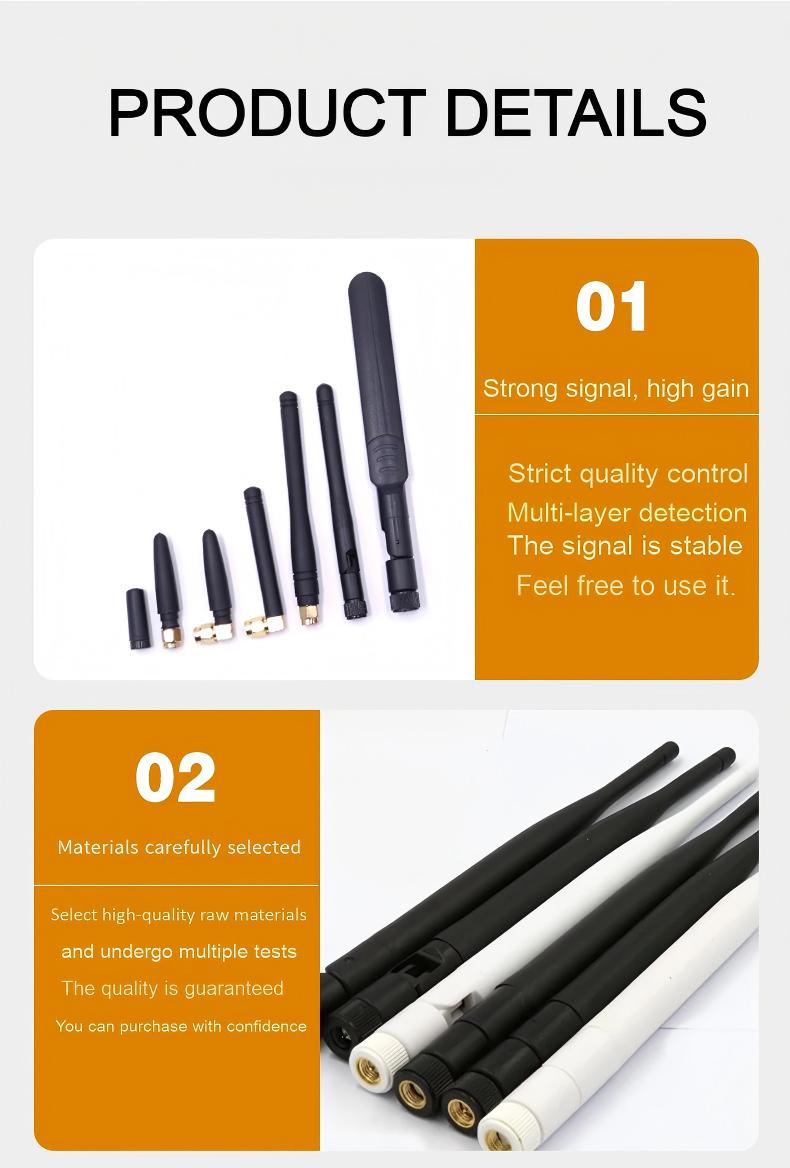
The color is usually black, with a few custom options available in other colors (such as white or orange).
Internal structure:
Core radiator: An internal spiral-wound metal wire (copper or steel) concealed within, serving as the radiating element of the antenna.
Base matching circuit: A small matching circuit (such as a capacitor or inductor) may be integrated at the bottom to optimize impedance (typically 50Ω) for device matching.
Connector: Common RF interfaces such as SMA, RP-SMA, and TNC are used at the bottom, allowing direct screw connection to equipment.
Shape: cylindrical or conical, typically 5–20 cm in length (depending on the operating frequency band), with a diameter of approximately 0.5–2 cm.
2. Operating Principle and Electrical Characteristics
Radiation Principle: The internal spiral wire essentially functions as a shortened monopole antenna, with its electrical length extended through the spiral structure, enabling resonance at the target frequency band (such as 433 MHz or 2.4 GHz) despite its small physical dimensions.
Omnidirectional radiation: When installed vertically, it provides uniform radiation in the horizontal direction at 360°, with lower gain in the vertical direction.
Band coverage
1. Single-band: Designed specifically for a particular frequency band (e.g., GPS 1.5GHz, 4G 1.8GHz).
2. Multi-band: Supports multiple frequencies (e.g., simultaneously covering UHF 400 MHz and 2.4 GHz) through segmented spiral or inductive design.
3. Core Advantages
Physical durability:
The rubber casing is bend-resistant and waterproof (commonly IP67 rated), making it suitable for outdoor or mobile applications (such as automotive and handheld devices).
Easy to install:
Directly connect the device interface without complex setup.
Low cost:
Industrial mass production has low costs.
Lightweight:
Typically weighs less than 50 grams, making it ideal for portable devices.
4. Typical Application Scenarios
Consumer Electronics:
Home router (Wi-Fi 2.4GHz/5GHz), Bluetooth headphones, smart home sensors.
The detachable black rubber antenna on top of the TP-Link router.
Professional Wireless Communication:
Two-way radio (UHF/VHF band), vehicle-mounted radio, and drone video transmission antenna.
Internet of Things (IoT):
NB-IoT/LoRa module antenna, GPS positioning terminal.
Industrial equipment:
Industrial remote controls (cranes, AGVs), sensor network nodes.
5. Limitations and Considerations
Lower efficiency:
Due to miniaturization constraints, the radiation efficiency is typically only 30%–60% (compared to over 80% for full-size antennas).
Gain limited:
Low gain characteristics result in shorter transmission distances (for example, Wi-Fi routers with dipole antennas typically cover a range of ≤50 meters).
Installation location sensitive:
Must be installed vertically to ensure omnidirectionality; performance degrades when close to metal surfaces (ground plane effect).
Fixed frequency band:
Frequency cannot be adjusted after leaving the factory; precise model selection according to equipment frequency band is required.
6. Selection and Usage Recommendations
Matching frequency band:
Confirm the device's operating frequency band (e.g., 315 MHz, 868 MHz, 2.4 GHz) and select the corresponding resonant antenna.
Interface compatibility:
Verify the device interface type (e.g., SMA male/female) to avoid physical mismatch.
Scene Adaptation:
Outdoor equipment should have an IP67 protection rating; vehicle-mounted equipment should consider anti-vibration design.
Performance Upgrade:
Long-range requirements can be met by replacing with a high-gain antenna, but this will sacrifice omnidirectionality.
Summary: The whip antenna represents an economical and practical solution in wireless devices, favored in consumer electronics and industrial hardware due to its low cost, easy installation, and robust physical durability. However, its low gain and narrow bandwidth limit its application in high-performance scenarios, so professional external antennas remain necessary for long-range or highly reliable communications (such as drone video transmission or base stations).
Related News
- How Can a Smart Water Meter Antenna Improve Wireless Meter Reading Reliability
- Qianmu Launches Custom LDS 3D Antenna Solutions for Wearable, Automotive & Compact IoT Devices
- How Can the Right NB-IoT Antenna Improve Connectivity and Reliability for Industrial IoT Devices
- How Can the Right DAB Antenna Improve Digital Radio Reception in Modern Vehicles
- FPC vs. PCB Antennas: Key Differences for Compact Electronic Devices
- Shenzhen Qianmu Communication Technology Co., Ltd. Launches High-Performance Smart Water Meter Antenna for Global Smart Water Projects
Leave me a message