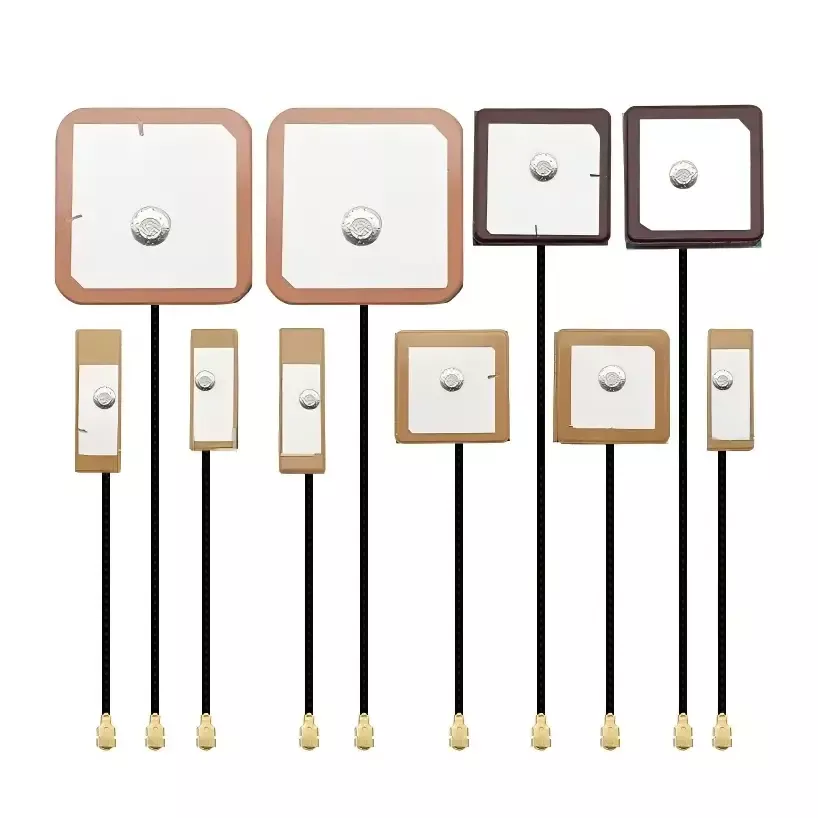
For modern law enforcement and field recording equipment, reliable positioning is more than a convenience—it can directly affect evidence traceability and operational safety. Qianmu develops the Body Cam GPS Antenna as an industrial-grade GNSS ceramic antenna for body-worn cameras, evidence collection terminals, patrol equipment, and other demanding mobile devices. Its GPS, BeiDou, GLONASS, and Galileo compatibility, RHCP design, and rugged ceramic structure are designed to maintain stable satellite reception in challenging environments.
A GPS antenna inside a body-worn camera must work around human-body obstruction, compact device structures, metal shielding, cellular RF modules, batteries, and changing outdoor conditions. A suitable GNSS antenna therefore needs more than basic satellite reception. This article explains how ceramic antenna construction, circular polarization, RF interference control, wide-temperature materials, and correct installation contribute to stable positioning. It also compares ceramic and flexible FPC antenna technologies and outlines key selection and installation considerations for manufacturers of professional body cameras.
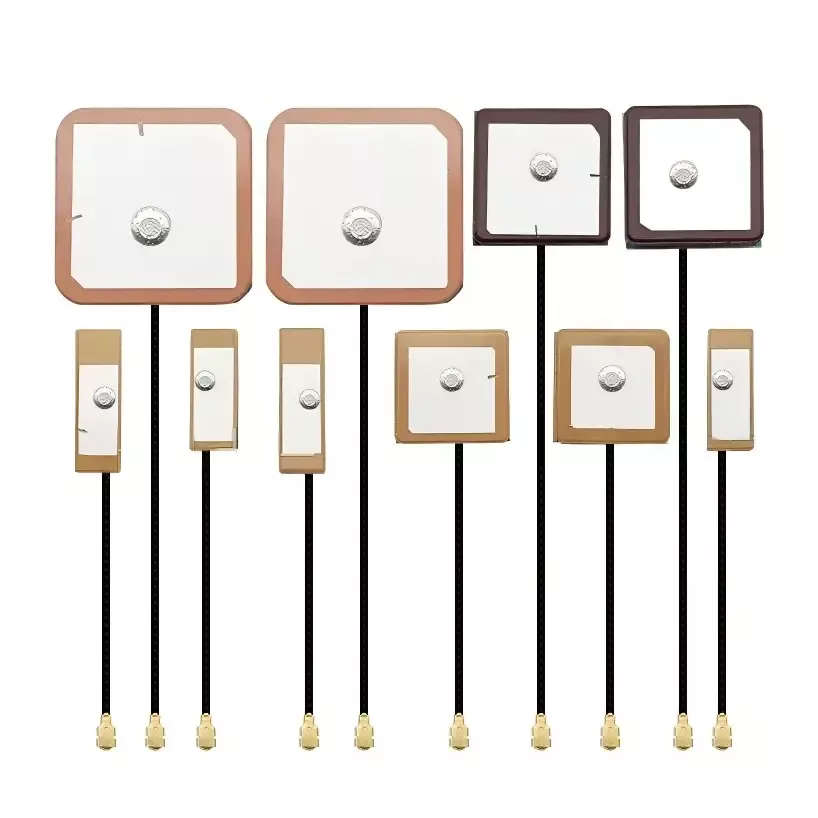
Table of Contents
- What Is a Body Cam GPS Antenna?
- Why Does GPS Performance Matter in Body-Worn Cameras?
- What Performance Factors Should Buyers Evaluate?
- Ceramic GPS Antenna vs. FPC Antenna
- Key Technical Specifications
- How Should a GPS Antenna Be Installed?
- Typical Applications
- FAQ
- Conclusion
What Is a Body Cam GPS Antenna?
A Body Cam GPS Antenna is a specialized GNSS receiving component designed to acquire satellite navigation signals for body-worn cameras and portable evidence-recording terminals. Unlike a general-purpose GPS antenna, it must operate within a compact enclosure while dealing with body obstruction, electronic interference, movement, and changing outdoor environments.
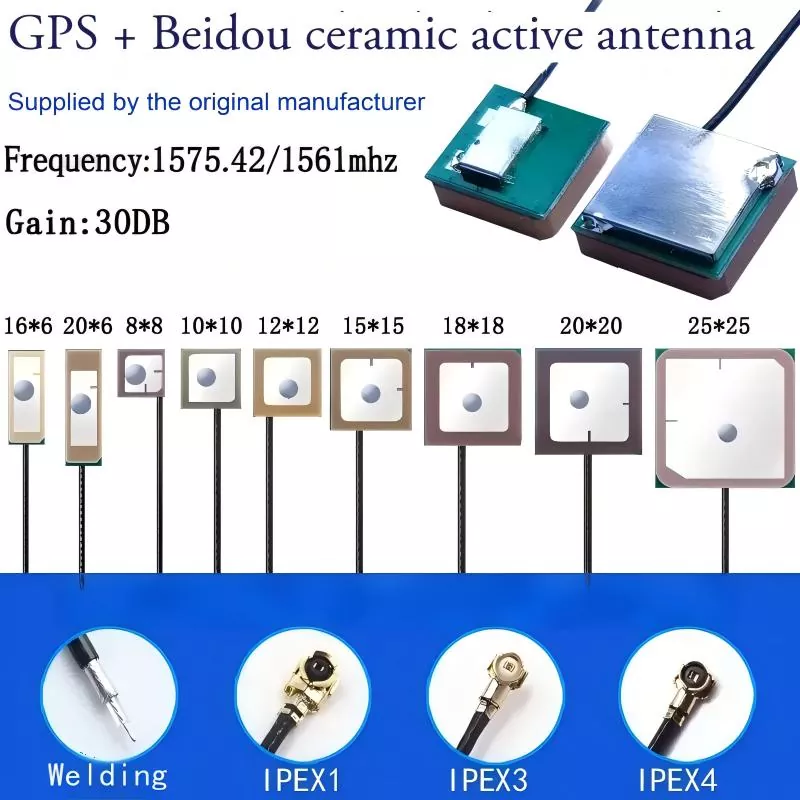
Qianmu's solution uses a high-dielectric ceramic patch structure and right-hand circular polarization (RHCP). The design supports GPS L1 at 1575.42 MHz and BeiDou B1 at 1561 MHz, while compatibility with major satellite navigation systems can support professional positioning applications in both domestic and international markets.
The antenna receives satellite signals and passes the optimized RF signal to the positioning chipset. The device can then calculate location, speed, time, and altitude information and associate location data with recorded audio and video. This creates a practical connection between recorded content and the location where an event occurred.
Why Does GPS Performance Matter in Body-Worn Cameras?
Body-worn cameras are frequently used while personnel are walking, running, turning, entering buildings, or operating vehicles. These movements create a more difficult RF environment than a stationary GPS receiver typically experiences.
Stable positioning can provide several practical benefits:
- Evidence traceability: Location information can be associated with recorded footage and operational events.
- Continuous trajectory records: Reliable satellite reception helps reduce gaps in movement tracking.
- Operational awareness: Field teams can obtain more dependable location information during mobile operations.
- Reduced positioning drift: Better antenna performance can help limit unstable location readings caused by weak or reflected signals.
- Global deployment: Multi-system GNSS compatibility is useful for equipment intended for different geographic markets.
For manufacturers, antenna selection should therefore be considered during the early stages of body-camera design rather than treated as a final component-selection task.
What Performance Factors Should Buyers Evaluate?
1. Satellite System Compatibility
Professional body cameras may be deployed across different countries and operating environments. Supporting GPS and BeiDou while accommodating GLONASS and Galileo can provide greater flexibility when designing equipment for domestic and overseas markets.
2. Circular Polarization
GNSS satellite signals have circular polarization characteristics. An RHCP antenna is designed to match this signal property and can help reduce the impact of certain reflected and improperly polarized signals. This becomes especially useful around buildings, vehicles, metal structures, and other reflective surfaces.
3. Resistance to RF Interference
A modern body camera may contain 4G/5G communication modules, Wi-Fi, processors, batteries, and other electronic circuits. These components can create an electrically complex environment. Antenna matching and appropriate physical separation can help reduce unwanted RF coupling and improve positioning stability.
4. Environmental Reliability
Professional equipment may be exposed to summer heat, winter cold, vibration, impact, humidity, and prolonged outdoor operation. Qianmu's industrial ceramic design is specified for an operating temperature range of -40°C to +75°C, supporting applications where consumer-grade components may not provide sufficient environmental margin.
5. Mechanical Durability
Body-worn equipment experiences repeated movement and physical handling. A rigid ceramic antenna structure can provide better dimensional stability than a flexible structure in applications where mechanical durability is a priority.
Ceramic GPS Antenna vs. FPC Antenna
Both ceramic and FPC antenna technologies can be useful, but their characteristics are different. The correct choice depends on the product structure, available space, environmental conditions, required positioning performance, and target application.
| Comparison Factor | Qianmu Ceramic Antenna | Standard FPC GPS Antenna |
|---|---|---|
| Core Material | Industrial high-temperature sintered ceramic | Flexible PI film |
| Signal Reception | Designed for strong satellite signal acquisition | Suitable for compact general-purpose applications |
| Polarization | RHCP | Depends on antenna design |
| Operating Temperature | -40°C to +75°C | Depends on specific model |
| Mechanical Structure | Rigid ceramic construction | Flexible film construction |
| Interference Control | Designed for demanding RF environments | More dependent on system layout and installation |
| Typical Application | Professional body cameras and industrial terminals | Compact consumer and portable electronics |
For manufacturers developing professional evidence-recording devices, a ceramic GNSS antenna can offer a useful combination of RF performance, environmental resistance, and structural stability.
Key Technical Specifications
When evaluating a GPS antenna for a body camera, engineers should review the complete RF and mechanical specification rather than focusing only on nominal frequency compatibility.
| Parameter | Qianmu Specification |
|---|---|
| Product Type | GNSS Ceramic Surface Mount Antenna |
| Operating Bands | GPS L1: 1575.42 MHz; BeiDou B1: 1561 MHz |
| Polarization | Right-Hand Circular Polarization (RHCP) |
| Characteristic Impedance | 50Ω |
| VSWR | ≤1.8 |
| Peak Gain | 3.0–3.8 dBi |
| Operating Temperature | -40°C to +75°C |
| Storage Temperature | -45°C to +80°C |
| Installation | SMT placement, through-hole soldering, or customized connectors |
These specifications provide a useful starting point for RF engineers. However, final antenna performance should always be verified after integration into the complete body-camera enclosure because housing materials, battery placement, PCB layout, cable routing, and nearby wireless modules can significantly affect actual RF performance.
How Should a GPS Antenna Be Installed?
Even a high-performance antenna can underperform if it is installed incorrectly. Proper mechanical and RF integration is therefore essential.
Choose a Suitable Installation Position
The ceramic radiation area should not be directly covered by metal housings, batteries, or metal brackets. A non-metallic area toward the upper portion of the body camera is generally preferable. Qianmu recommends maintaining at least 15 mm of separation from 4G/5G and Wi-Fi antennas where the product structure allows it.
Follow Correct Soldering Procedures
For pin-type antennas, solder joints should be complete and secure. For SMT products, the antenna should be aligned correctly and mounted according to the recommended PCB process. Excessive mechanical pressure should be avoided because ceramic components can be damaged by improper handling.
Control Cable and Power-Line Routing
Antenna cables should be routed carefully to reduce unnecessary coupling with power lines and high-current circuits. Where appropriate, insulating materials can also be used to isolate the antenna from strong electrical interference sources.
Test the Complete Device
Laboratory component testing is important, but it should not replace complete-machine verification. After assembly, manufacturers should evaluate cold-start and hot-start satellite acquisition, positioning accuracy, satellite count, and trajectory continuity under realistic outdoor conditions.
What Applications Can Use a Body Cam GPS Antenna?
A professional GNSS antenna can support a broad range of mobile recording and positioning equipment, including:
- 4G/5G law enforcement body cameras
- Police and traffic enforcement recording terminals
- Urban management and road administration body cameras
- Fire department audiovisual evidence equipment
- Explosion-proof and intrinsically safe recording terminals
- Mining and petrochemical inspection equipment
- Power inspection and railway patrol devices
- Outdoor inspection and field-operation terminals
- Export-oriented multi-band body-worn cameras
The combination of GNSS reception, compact integration, and environmental durability makes this antenna technology particularly relevant to professional equipment that must operate continuously outside controlled indoor environments.
FAQ
1. What satellite systems does the Body Cam GPS Antenna support?
The antenna is designed around GPS L1 and BeiDou B1 frequencies and supports multi-system GNSS applications involving GPS, BeiDou, GLONASS, and Galileo.
2. Why is RHCP important for GNSS reception?
RHCP, or right-hand circular polarization, matches the polarization characteristics of common GNSS satellite signals. It can help improve reception consistency and reduce the impact of some reflected or improperly polarized signals.
3. Can the antenna work in extreme temperatures?
The specified operating temperature range is -40°C to +75°C, making the antenna suitable for many demanding outdoor and industrial applications.
4. Can the antenna be customized for a new body-camera design?
Yes. As an original manufacturer, Qianmu can support customized antenna development according to device structure, operating frequency, installation requirements, connector configuration, and RF performance targets.
5. How much clearance should be maintained from 4G/5G and Wi-Fi antennas?
A minimum separation of 15 mm is recommended where the product structure permits. The final distance should be confirmed through RF testing because enclosure geometry and internal electronics can change the optimum antenna position.
6. Is outdoor testing necessary after antenna installation?
Yes. Complete-device outdoor testing is strongly recommended. Engineers should verify satellite acquisition, positioning accuracy, cold and hot starts, and trajectory continuity after the antenna has been integrated into the final enclosure.
Conclusion
A reliable GNSS antenna is a critical component of a professional body-worn camera because positioning performance influences location accuracy, evidence traceability, and operational reliability. Ceramic construction, RHCP polarization, multi-system GNSS compatibility, interference control, and wide-temperature performance can provide a stronger foundation for demanding body-camera applications.
Qianmu combines antenna R&D, manufacturing, RF testing, and customized production to support body-camera manufacturers and system integrators. For projects requiring customized frequency bands, dimensions, connectors, installation structures, or RF optimization, explore the Body Cam GPS Antenna solution and contact us for technical consultation, samples, and customized antenna development.