Why Is a Flexible Headphone Antenna Essential for Next-Generation Wireless Audio Devices
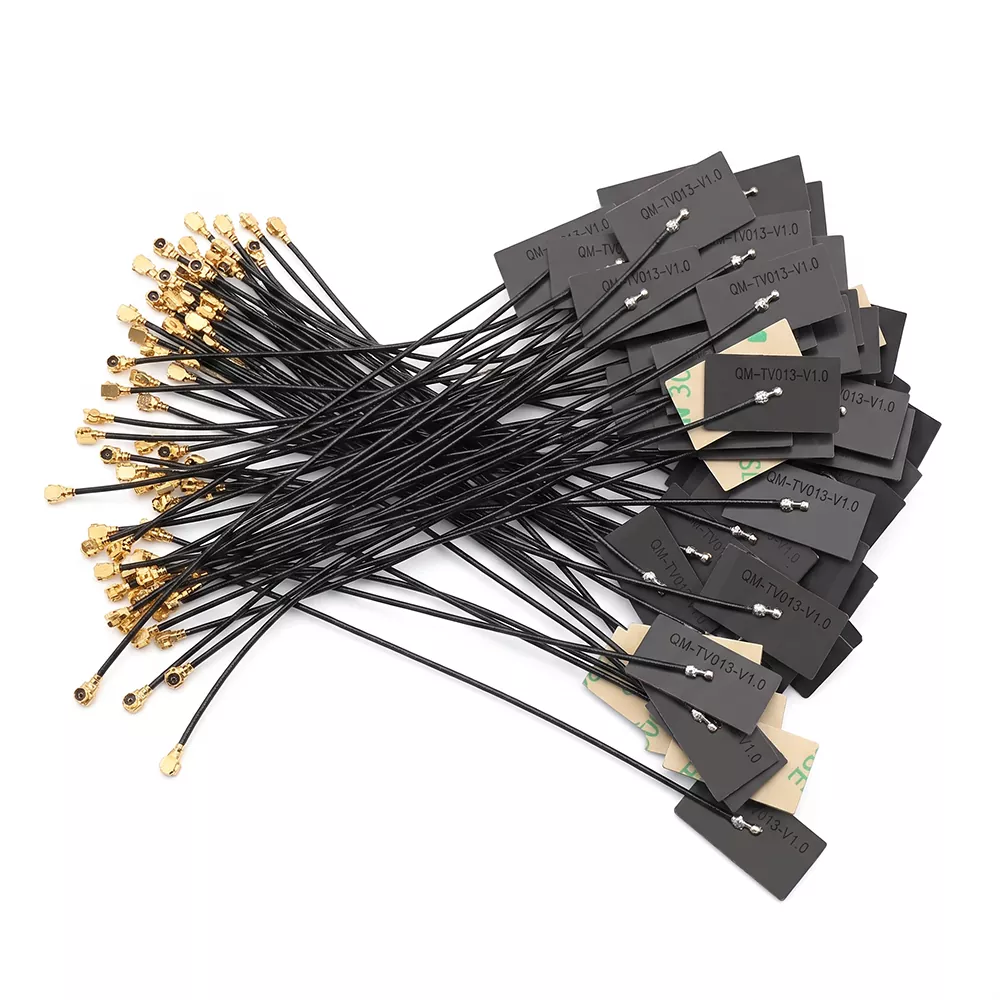
As wireless earbuds and headphones become smaller, smarter, and more feature-rich, antenna design plays an increasingly important role in maintaining reliable wireless communication. Qianmu develops the Flexible Headphone Antenna for TWS earbuds, wireless headphones, bone-conduction devices, and other compact Bluetooth audio products, providing flexible, ultra-thin, and customizable RF solutions for space-constrained applications.
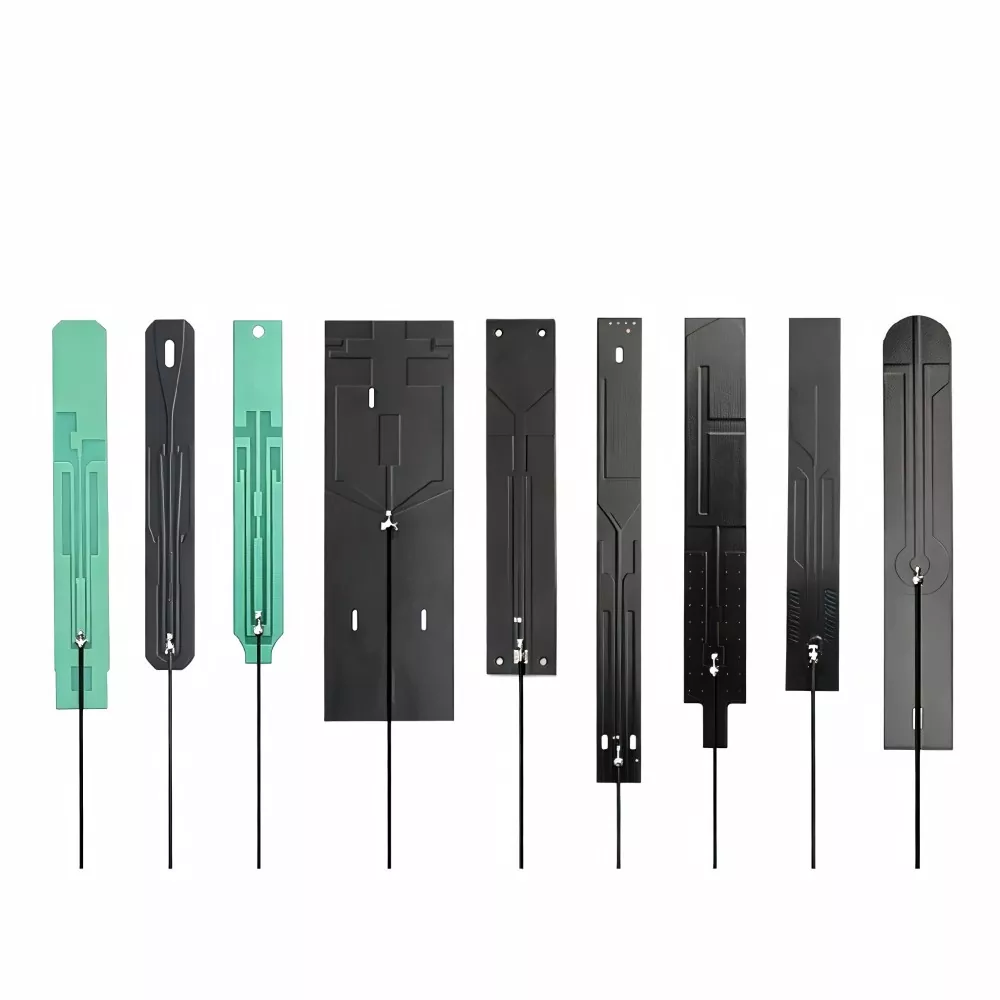
A reliable antenna is essential for stable Bluetooth communication, especially when wireless headphones need to operate within extremely compact and irregular internal spaces. A Flexible Headphone Antenna uses a flexible PI or LCP substrate with a precision conductive radiation pattern, allowing the antenna to conform to curved surfaces while maintaining dependable RF performance.
Table of Contents
- Why Is Antenna Design So Important in Modern Headphones?
- What Is a Flexible Headphone Antenna?
- How Does a Flexible Headphone Antenna Work?
- What Are the Main Advantages of a Flexible Headphone Antenna?
- Where Can Flexible Headphone Antennas Be Used?
- What Technical Specifications Should Buyers Consider?
- How Does It Compare with Traditional Antennas?
- How Should Manufacturers Choose the Right Antenna?
- Why Do Manufacturing and RF Testing Matter?
- Frequently Asked Questions
- Conclusion
Why Is Antenna Design So Important in Modern Headphones?
Wireless headphones rely on radio-frequency communication to exchange audio and control data with smartphones, tablets, computers, and other Bluetooth-enabled devices. Although an antenna occupies only a small amount of physical space, its design can have a major influence on wireless performance.
The internal environment of modern TWS earbuds is particularly challenging. Batteries, speakers, microphones, charging components, processors, shielding structures, and mechanical components all compete for limited space. At the same time, the antenna operates close to the human body, which can affect RF propagation and signal characteristics.
Traditional antenna solutions may require dedicated PCB space or a relatively large installation area. A flexible antenna gives engineers greater freedom to position the radiation element along curved internal surfaces, battery compartments, stems, or other available areas.
For manufacturers developing compact Bluetooth products, antenna selection should therefore be considered during the early mechanical and RF design stages instead of being treated as a final assembly component.
What Is a Flexible Headphone Antenna?
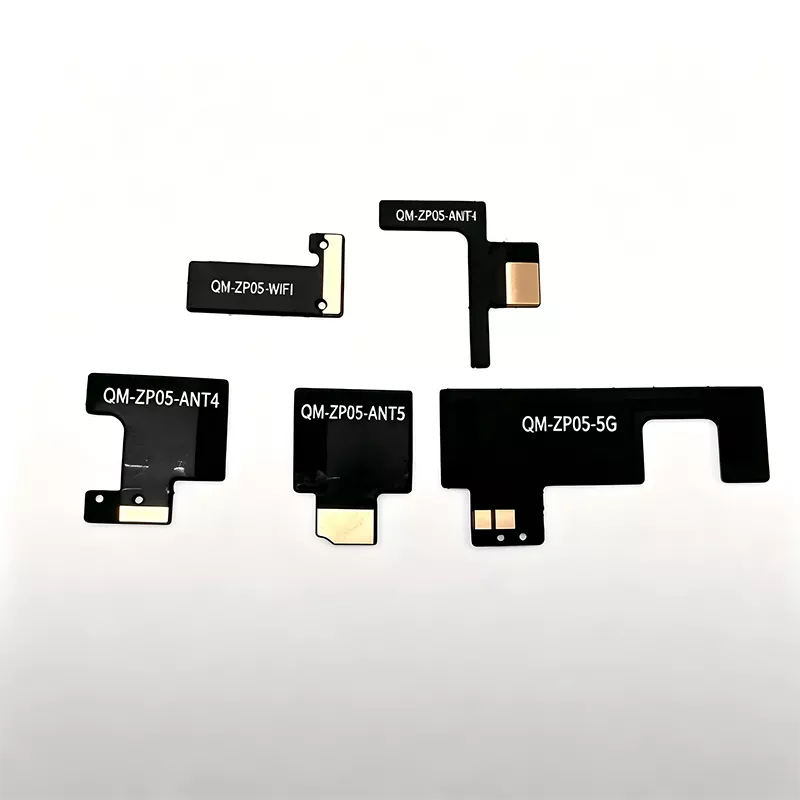
A Flexible Headphone Antenna is a miniature RF antenna designed for compact wireless audio devices. It generally uses a flexible PI or LCP substrate with a conductive radiation pattern formed through precision manufacturing and etching processes.
Unlike rigid PCB antennas, the flexible structure can bend and conform to curved or irregular surfaces. This makes it especially suitable for products where the available antenna cavity is narrow, curved, or difficult to accommodate with conventional rigid components.
Flexible headphone antennas are commonly designed for the 2.4 GHz Bluetooth ISM band and can support modern Bluetooth applications. Depending on the project, manufacturers can customize the antenna dimensions, substrate, lead length, terminal configuration, and installation method to match the product architecture.
This design flexibility makes FPC-based antennas particularly attractive for TWS earbuds, wireless headphones, bone-conduction headphones, neckband devices, and other compact wireless products.
How Does a Flexible Headphone Antenna Work?
The operating principle of a flexible headphone antenna is based on converting electrical RF signals into electromagnetic waves and receiving electromagnetic energy from the surrounding environment.
- The Bluetooth chipset generates a high-frequency electrical signal.
- The RF signal travels through the transmission path toward the antenna.
- The conductive radiation pattern converts the electrical signal into electromagnetic energy.
- The antenna radiates the signal into the surrounding environment.
- During reception, the antenna captures electromagnetic signals transmitted by the paired Bluetooth device.
- The received RF energy is converted into an electrical signal and transferred to the Bluetooth communication module.
Because headphones and earbuds are worn close to the human body, antenna matching, grounding, and positioning are particularly important. The human body, battery, metal components, and housing materials can all influence the antenna's impedance and radiation characteristics.
Proper RF tuning is therefore essential. A well-designed antenna should be evaluated inside the actual product enclosure rather than tested only as an isolated component. This helps engineers identify detuning effects and optimize the final wireless performance.
What Are the Main Advantages of a Flexible Headphone Antenna?
Ultra-Thin Construction
Space is one of the biggest challenges in TWS earbud development. Flexible FPC antenna construction allows manufacturers to integrate an RF component into narrow spaces without occupying excessive mechanical volume.
Depending on the configuration, flexible antenna thickness can be available in approximately 0.12–0.30 mm, with common options including 0.15 mm, 0.20 mm, and 0.25 mm. This helps product designers optimize valuable internal space.
Excellent Flexibility
The flexible substrate allows the antenna to follow curved and irregular internal surfaces. This is especially useful when a conventional rigid antenna cannot fit into the available structure.
For products exposed to repeated bending or mechanical movement, bending durability is another important consideration. Proper substrate selection and adhesive design can improve mechanical reliability during long-term use.
Stable Bluetooth RF Performance
Antenna performance depends on more than the radiation element itself. Feed-point design, grounding, impedance matching, installation position, and nearby components can all affect RF characteristics.
For this reason, a professional antenna supplier should be able to provide RF design support and tuning recommendations instead of simply supplying a standard antenna.
Easy Assembly
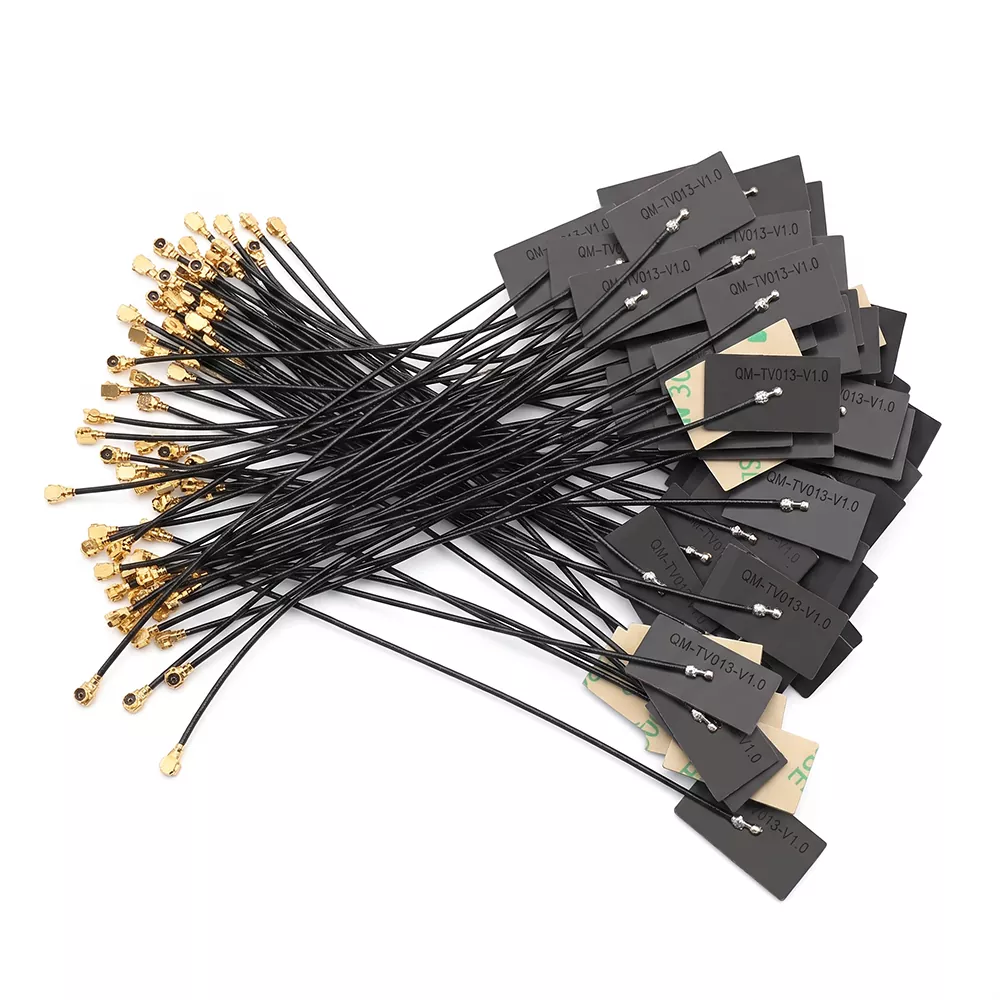
Flexible antennas can be supplied with heat-resistant adhesive backing, allowing them to be attached directly to the intended internal surface. This can reduce the need for additional mechanical fixing structures and simplify assembly.
High Customization Capability
Different headphone housings require different antenna geometries. A customized solution can accommodate variations in:
- Antenna outline and dimensions
- Operating frequency
- Lead length
- Connector and terminal type
- PI or LCP substrate
- Installation location
- Bending radius
- Product housing structure
Where Can Flexible Headphone Antennas Be Used?
Although the technology is strongly associated with TWS earbuds, flexible antennas can support a much broader range of compact wireless audio products.
| Application | Typical Antenna Requirement | Benefit of Flexible Design |
|---|---|---|
| TWS Bluetooth Earbuds | Compact 2.4 GHz antenna | Fits extremely limited internal spaces |
| Over-Ear Wireless Headphones | Stable Bluetooth connectivity | Can follow curved housing structures |
| Bone-Conduction Headphones | Lightweight and compact RF component | Fits narrow internal areas |
| Neckband Headphones | Flexible installation | Adapts to curved internal structures |
| Wireless Audio Receivers | Reliable short-range communication | Provides greater mechanical design freedom |
| Compact Wireless Headsets | Customized antenna geometry | Supports product-specific layouts |
What Technical Specifications Should Buyers Consider?
When sourcing a flexible antenna from a China manufacturer or supplier, buyers should evaluate both electrical and mechanical specifications. An antenna that fits the available space may still require RF tuning after it is installed inside the finished product.
| Parameter | Reference Specification | Engineering Consideration |
|---|---|---|
| Product Type | Flexible Headphone Antenna / FPC Bluetooth Antenna | Suitable for compact wireless audio products |
| Frequency | 2400–2483.5 MHz | Supports the Bluetooth ISM frequency range |
| Gain | 1.5–2.5 dBi | Should be evaluated together with the enclosure |
| VSWR | ≤1.8 | Important for impedance matching |
| Substrate | PI / LCP | Selected according to mechanical and RF requirements |
| Thickness | 0.15 / 0.20 / 0.25 mm | Helps optimize internal product space |
| Bending Life | ≥10,000 cycles at R=1.5 mm | Relevant for flexible installation |
| Operating Temperature | -20°C to +70°C | Should match the target application environment |
| Connector | Tinned lead / U.FL / IPEX | Choose according to the PCB architecture |
| Compliance | RoHS / REACH / CE | Verify project-specific certification requirements |
These values should be treated as reference specifications. Final performance depends on the antenna design, PCB layout, grounding structure, housing material, installation position, and overall RF architecture.
How Does It Compare with Traditional Antennas?
Manufacturers generally have several antenna technologies to consider, including spring antennas, rigid PCB antennas, and flexible FPC antennas. The most suitable option depends on the product architecture, available space, cost target, RF requirements, and expected production volume.
| Feature | Flexible Headphone Antenna | Spring Antenna | Rigid PCB Antenna |
|---|---|---|---|
| Space Adaptation | Excellent | Limited | Moderate |
| Curved Surface Installation | Excellent | Limited | Poor |
| Assembly | Adhesive-based installation available | Usually requires mechanical fixation | Requires PCB space |
| Customization | High | Limited | Moderate |
| Mechanical Integration | Highly adaptable | Requires dedicated space | Dependent on PCB structure |
| Design Freedom | Very High | Low | Moderate |
For earbuds with irregular housing structures or extremely limited internal space, flexible FPC construction can provide a significant mechanical integration advantage. It enables antenna designers to work around existing components instead of requiring the entire product structure to accommodate a rigid antenna.
How Should Manufacturers Choose the Right Antenna?
Selecting a headphone antenna should begin with the finished product rather than with a generic antenna catalog. The following factors can help manufacturers make a more reliable decision.
- Measure the available space. Provide accurate information about the length, width, height, curves, and surrounding components of the antenna cavity.
- Define the RF requirements. Confirm the Bluetooth frequency range, expected communication distance, impedance requirements, and antenna location.
- Consider housing materials. Plastic, metal, batteries, shielding components, and other conductive structures can influence RF performance.
- Evaluate mechanical requirements. Products exposed to vibration, movement, or repeated bending require appropriate flexibility and attachment performance.
- Request prototype samples. Testing the antenna inside the actual enclosure provides more meaningful results than evaluating the antenna independently.
- Review manufacturing capabilities. For mass-production projects, assess quality consistency, RF testing, customization, documentation, and delivery capability.
Providing accurate 2D or 3D product drawings during the development stage allows the antenna manufacturer to optimize the design more efficiently. Prototype validation can then help reduce the risk of discovering RF problems after tooling and mass production have begun.
Why Do Manufacturing and RF Testing Matter?
Antenna performance is highly dependent on manufacturing consistency. Small variations in dimensions, conductive patterns, connector positioning, adhesive placement, or substrate characteristics can affect the final RF result.
Therefore, an experienced antenna manufacturer should provide more than a physical component. RF engineering, sample development, impedance matching, tuning, production inspection, and technical documentation can all contribute to a more predictable product-development process.
Professional RF testing can include performance verification in an anechoic chamber, environmental testing, temperature cycling, mechanical bending tests, and other quality-control procedures according to the application requirements.
For international procurement, documentation and quality assurance are also important. Depending on the project, buyers may need material compliance documentation, inspection reports, packing information, commercial documents, and other export-related support.
Frequently Asked Questions
Q1: What is a Flexible Headphone Antenna?
A Flexible Headphone Antenna is a thin, bendable RF antenna designed for compact wireless audio products such as TWS earbuds, Bluetooth headphones, bone-conduction headphones, and wireless headsets. Its flexible substrate allows it to conform to curved internal surfaces.
Q2: Can a Flexible Headphone Antenna support Bluetooth 5.3?
Yes. A properly designed 2.4 GHz antenna can be used with Bluetooth 5.3 applications when the RF layout, impedance matching, grounding, and installation conditions are correctly implemented.
Q3: Can the antenna dimensions be customized?
Yes. Flexible antennas can be customized according to the product's internal space and mechanical structure. Parameters such as length, width, shape, thickness, lead length, connector configuration, and installation method can be adjusted according to project requirements.
Q4: Which substrate materials are commonly available?
PI and LCP are commonly used flexible antenna substrate materials. The appropriate material depends on the required RF characteristics, mechanical flexibility, temperature conditions, reliability requirements, and target production cost.
Q5: Can a flexible antenna use adhesive backing?
Yes. Adhesive backing can simplify installation by allowing the antenna to be fixed directly to the intended internal surface. The adhesive type should be selected according to the operating temperature, housing material, assembly process, and expected service conditions.
Q6: What information should buyers provide when requesting a customized antenna?
Buyers should ideally provide product drawings, available antenna space, PCB layout information, target frequency band, connector requirements, housing material, installation position, mechanical requirements, and expected application environment. This information helps the manufacturer develop a more suitable antenna solution.
Q7: Why should antenna performance be tested inside the final product?
The antenna does not operate independently. Batteries, PCBs, metal components, plastic housing, grounding structures, and the human body can all influence RF performance. Testing the antenna inside the final enclosure therefore provides a more realistic evaluation of connection stability and overall wireless performance.
Conclusion
The growing demand for smaller and more intelligent wireless audio products is creating increasingly complex antenna integration challenges. A Flexible Headphone Antenna offers an effective solution by combining compact dimensions, mechanical flexibility, customizable geometry, and reliable Bluetooth RF performance. For TWS earbuds, bone-conduction headphones, neckband devices, and other compact wireless products, flexible antenna technology can provide greater design freedom while helping manufacturers overcome crowded internal structures.
For companies sourcing a customized antenna solution, partnering with an experienced manufacturer can simplify prototype development, RF tuning, testing, and mass production. If you are developing a new wireless headphone, TWS earbud, or Bluetooth audio product and need an antenna matched to your specific mechanical and RF requirements, contact us to discuss your drawings, technical specifications, customization requirements, samples, and production plans with the Qianmu antenna engineering team.
Related News
- How Can a Smart Water Meter Antenna Improve Wireless Meter Reading Reliability
- Qianmu Launches Custom LDS 3D Antenna Solutions for Wearable, Automotive & Compact IoT Devices
- How Can the Right NB-IoT Antenna Improve Connectivity and Reliability for Industrial IoT Devices
- How Can the Right DAB Antenna Improve Digital Radio Reception in Modern Vehicles
- FPC vs. PCB Antennas: Key Differences for Compact Electronic Devices
- Shenzhen Qianmu Communication Technology Co., Ltd. Launches High-Performance Smart Water Meter Antenna for Global Smart Water Projects
Leave me a message